

Italian pastries are delicate, butter-rich confections that vary significantly by region, from the crisp edges of Sicilian cannoli to the soft crumb of Roman croissants. At Scittino's Italian Market, we have served these traditional treats since 1973, preserving the authentic methods that define their flavor. Understanding the distinct categories helps you choose the right pastry for your morning coffee or afternoon snack. This guide breaks down the essential types you should experience.
Cannoli: The Sicilian Icon
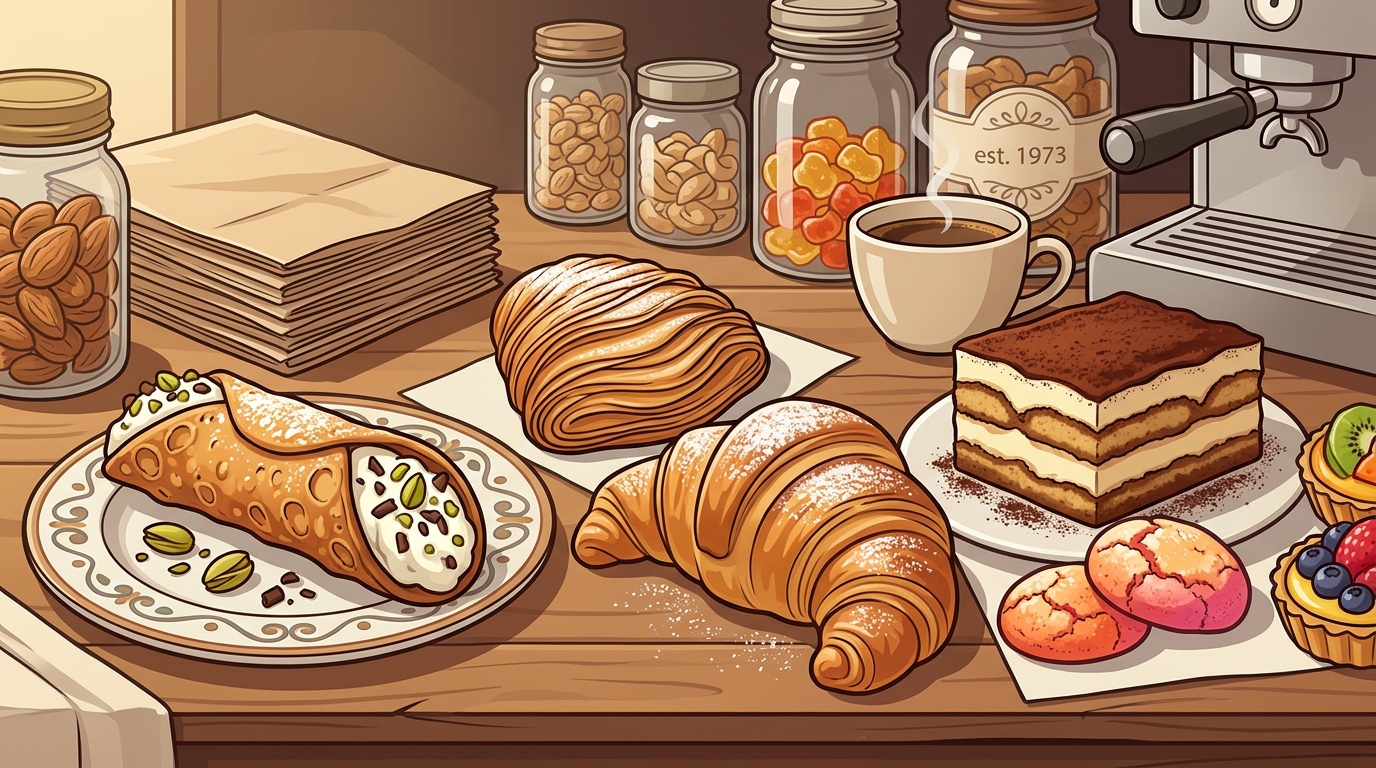
Cannoli is a hollow pastry tube filled with sweetened ricotta cheese. The shell is made from a thin dough rolled around a metal form and deep-fried until golden and crisp. The filling is typically a mixture of ricotta, sugar, and orange zest, sometimes with candied fruit. This pastry is a staple of Sicilian cuisine and a signature item at our Catonsville location.
Why the Shell Matters
The quality of a cannoli depends entirely on the shell. A proper shell should be shatteringly crisp, not chewy or soft. The dough is often flavored with a hint of anise or cinnamon. When you bite into a good cannoli, the contrast between the hard shell and the creamy, slightly tangy filling is the defining characteristic.
Choosing the Right Filling
Traditional fillings use whole-milk ricotta, which is creamier and less sweet than the part-skim varieties found in standard grocery stores. The ricotta is strained to remove excess moisture, ensuring the filling does not make the shell soggy. At Scittino's, we prepare these fillings fresh to maintain that textural integrity.
Sfogliatella: The Neapolitan Layer
Sfogliatella is a layered pastry originating from Naples, known for its flaky, buttery exterior. The name translates to "little leaf," referring to the hundreds of thin layers of dough. There are two main types: the round, fried sfogliatella frolla and the crescent-shaped, baked sfogliatella riccia. The riccia is the more complex preparation, requiring a dough that is stretched and folded repeatedly to create the signature flakiness.
The Ricotta and Candied Orange Filling
Italian Croissants: The Butter Difference
An Italian croissant is a laminated dough pastry that differs significantly from its French counterpart. While French croissants are known for their high butter content and airy crumb, Italian croissants are often denser and less buttery. They are frequently filled with cream, jam, or custard. The dough is rolled out and folded, but the process is less intensive than the French method, resulting in a pastry that is sturdy enough to hold fillings without collapsing.
Regional Variations
In Rome, the croissant is a breakfast staple, often eaten with a cappuccino. In other regions, you might find cornetti, which are similar but sometimes made with a slightly different dough. The key is to look for a pastry that is golden brown and has a visible layer structure. At our Falls Road location, we offer a selection of pastries that reflect these regional styles, ensuring you get an authentic taste.
Biscotti: The Twice-Baked Cookie
The Art of Dipping
The ideal biscotti is hard enough to withstand dipping without crumbling. It is often served with vin santo, a sweet Italian wine, or a strong espresso. The crunch of the biscotti contrasts with the liquid, creating a balanced bite. This pastry is a perfect accompaniment to a long conversation or a quiet moment with a book. You can find a variety of biscotti at Scittino's Italian Market, made with high-quality nuts and spices.
Tiramisu: The Dessert Cake
Tiramisu is a layered dessert that translates to "pick me up." It is made with layers of coffee-soaked ladyfingers and a mascarpone cream. The dessert is dusted with cocoa powder before serving. Unlike traditional pastries, tiramisu is not baked; it is assembled and chilled. The coffee provides a bitter note that balances the sweetness of the cream. This dessert is a favorite for special occasions and is often served at our catering events.
Key Ingredients
The quality of the mascarpone is crucial. It should be rich and creamy, not grainy. The ladyfingers, known as savoiardi, must be dipped briefly in espresso to absorb the liquid without becoming mushy. A good tiramisu should be light and airy, with a distinct separation between the layers. It is a dessert that showcases the simplicity of Italian cooking, where a few high-quality ingredients create a complex flavor profile.
Key Takeaways
- Cannoli is a Sicilian pastry with a crisp shell and sweet ricotta filling.
- Sfogliatella is a Neapolitan layered pastry known for its flaky texture.
- Italian croissants are denser and less buttery than their French counterparts.
- Tiramisu is a layered dessert made with coffee-soaked ladyfingers and mascarpone.
- Authentic pastries require high-quality ingredients and skilled preparation.
- Scittino's Italian Market offers a selection of these traditional pastries in Baltimore and Catonsville.
Frequently Asked Questions
What is the difference between cannoli and sfogliatella?
Cannoli is a hollow tube filled with ricotta, while sfogliatella is a layered, flaky pastry often filled with ricotta and candied orange. Cannoli is from Sicily, and sfogliatella is from Naples.
Are Italian croissants the same as French croissants?
No, Italian croissants are typically denser and less buttery. They are often filled with cream or jam and are a common breakfast item in Italy.
What is the best way to store Italian pastries?
Most Italian pastries are best eaten fresh. If you need to store them, keep them in an airtight container at room temperature for up to two days. Avoid refrigerating them, as this can make the dough tough.
Can I find these pastries at Scittino's Italian Market?
Yes, Scittino's Italian Market offers a selection of traditional Italian pastries, including cannoli and other baked goods, at both our Catonsville and Falls Road locations.
What is the origin of tiramisu?
Tiramisu originated in the Veneto region of Italy in the 1970s. It is a layered dessert made with coffee-soaked ladyfingers and mascarpone cream.
Why are biscotti twice-baked?
Biscotti are twice-baked to remove moisture, making them hard and dry. This process gives them a long shelf life and makes them ideal for dipping in wine or coffee.